Written by: Wen Lei
Edited by: Zhang Gan
Translated by: Li Tingting, Xiao Liang
Source: School of Computer Science
On March 10, the results of the 2025 ASC World Student Supercomputer Challenge (ASC25) were released. Under the guidance of Supervisor Lin Peiying, the student supercomputing team from the School of Computer Science, consisting of 2022 undergraduate students Xia Jiaru, Zhang Zhixiong, Wu Liangshan, Gong Fuxing and Qiu Peng, claimed the Global 46th Place and won the Second Prize.
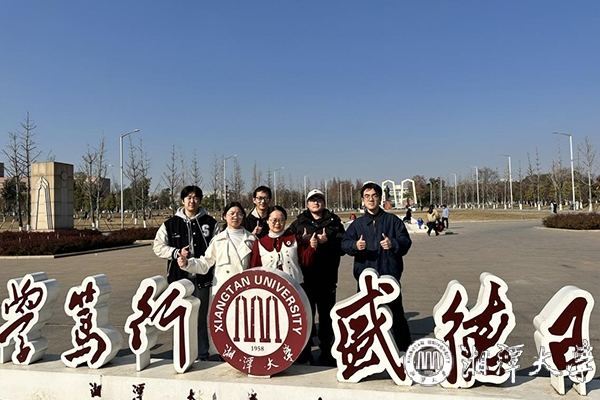
Initiated and organized by China, the ASC Worl Student Supercomputer Challenge is the world’s largest university-level supercomputing competition. It facilitates the exchange and cultivation of young talents in supercomputing across countries and regions, and advances the application level and R&D capacity of supercomputing technologies. Having been held for 12 sessions so far, the event has attracted tens of thousands of university students worldwide and more than 300 strong teams to participate.
The competition topics of ASC25 covered HPC system design, optimization of HPL and HPCG benchmark tests, detection of RNA methylation modification sites, and inference optimization of AlphaFold3, comprehensively assessing participants’ innovative capabilities in integrating high-performance computing with artificial intelligence. Our university’s supercomputing team conducted systematic research and in-depth analysis on industry optimization algorithms, demonstrating outstanding learning and practical capabilities in supercomputing application analysis and performance optimization.
The task of RNA methylation modification site detection required performance optimization for the detection process of 5-methylcytosine (m5C) modification sites on mRNA. The team sorted out operational procedures, built the corresponding software environment, and processed approximately 340 million sequencing data entries from three datasets. By adopting a series of parallelization methods, the team successfully cut the detection time from 6.5 hours to 1.5 hours, while maintaining accuracy and correlation above 95%.
The AlphaFold3 inference optimization task demanded the optimization of AlphaFold3 structure prediction code, as well as code migration and operational optimization from the GPU platform to the CPU platform. The team successfully migrated the inference process to the CPU platform. Targeting the attention module, the team carried out optimization starting from the einsum operator. While ensuring prediction accuracy, it achieved efficient inference for 12 groups of protein sequences designated by the organizing committee. By optimizing the XLA kernel and parallel strategy for inference, the overall inference performance of AlphaFold3 was improved by an average factor of 1.164 times.

 Perspective Students
Current Students
Visitors
Staff
Alumni
Perspective Students
Current Students
Visitors
Staff
Alumni