Translated by Li Wenqiang, Huang Can
Source:Collegeof Chemistry
Recently, Professor Wang Xianyou of theCollegeof Chemistry at Xiangtan University received an official letter from B.V. Gusev, President of the Russian Academy of Engineering, congratulating him on his election as a foreign member of the academy.
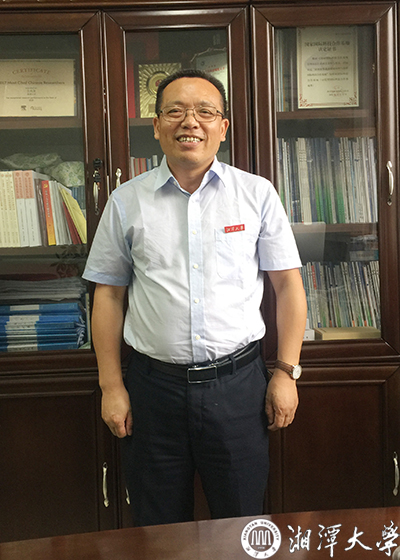
Professor Wang Xianyou is a professor and doctoral supervisor at theCollegeof Chemistry, Xiangtan University.He is among the first group of Second-gradeProfessors in Hunan Province, a Fellow of the Royal Society of Chemistry (FRSC), one of Stanford University’s World’s Top 2% Scientists, and has been selected as an Elsevier Highly Cited Chinese Researcher for nine consecutive years.He also serves as a member of the Chinese Society of Electrochemistry, a council member of the Chinese Society of Solid State Ionics, Vice Chair of the Specialized Committee on Energy Storage and Power Batteries, Director of the Expert Committee of the Hunan Battery Industry Association, and Deputy Director of the Expert Committee of the Hunan New Materials Association. In addition, he is Director of the National International Science and Technology Cooperation Base for New Energy Equipment and Energy Storage Materials and Devices, and Director of the National-Local Joint Engineering Laboratory for Preparation Technology of Key Materials for New Energy Storage Batteries.
Professor Wang has long been engaged in research on electrochemical energy storage and conversion and advanced energy storage materials. He has undertaken over 50 national and provincial&Ministerial-level research projects, including key projects of the National Natural Science Foundation of China for Regional Innovation, as well as a number of industry-university-research achievement transformation projects, making significant contributions to the development of China’s new energy industry. He has published more than 520 high-quality research papers in high-level international journals. He serves as editor-in-chief of the international journalUniversal Journal of Carbon Researchand is an editorial board member of journals such asEnergy Materials, Battery, andC-Journal of Carbon Researchat home and abroad. He has received more than ten awards, including the first Hunan Advanced Science and Technology Worker, Scientific Chinese 2016 Person of the Year,the Tianjin Natural Science Second Prize, the Hunan Technological Invention Second Prize, and the 12th China Patent Excellence Award.
In the 1990s, Professor Wang was among the first in China to propose coating the surface of spherical nickel hydroxide with cobalt or cobalt compounds to solve its conductivity problem, and he successfully achieved industrialization. The achievement remains a mainstream approach in the production of cathode materials for nickel-metal hydride batteries. In the late 1990s, as China’s lithium-ion battery industry was developing rapidly, systematic professional literature in the field was still lacking.In 2000, Professor Wang co-authored China’s first monograph on lithium-ion batteries,Lithium-Ion Batteries, which systematically expounded the principles, design, preparation, and testing technologies of lithium-ion batteries and played an important role in advancing both technological progress and industrial development in China.In 2001, he pioneered research on sodium-ion batteries in China, proposing that sodium-ion batteries have an electrochemical mechanism similar to that of lithium-ion batteries but with more abundant and cost-effective sodium resources. In 2003, in an effort to further improve the energy density of lithium-ion batteries, he was again among the first in China to initiate research on using metal fluorides based on conversion reactions as cathode materials for lithium-ion batteries, and proposed the concept that iron fluoride containing trace amounts of crystalline water could serve as a new type of cathode material. In recent years, focusing on fluorine’s special position in the periodic table and its unique electronic structure, he has taken the lead in China in conducting research on fluoride-ion batteries and has made significant progress in this field.
Founded in 1990, the Russian Academy of Engineering is a scientific institution and national public organization with significant international academic influence. Its predecessor was the Engineering Academy of the Soviet Union. It is a cross-sector scientific institution jointly established by organizations including the Russian Academy of Sciences, the Ministry of Engineering, the Ministry of Defense, and the Federal Space and Aviation authorities of Russia. The academy currently has more than 1,500 members, including over 200 foreign members, among them many distinguished academicians and scientists, such as former presidents of the Chinese Academy of Engineering Song Jian and Xu Kuangdi, and current president Li Xiaohong.

 Perspective Students
Current Students
Visitors
Staff
Alumni
Perspective Students
Current Students
Visitors
Staff
Alumni