Written byWang Chengqi
Edited byWang Chengqi
Translated by Li Wenqiang, Huang Can
Source: News Center
On December 15, the 2023 International Conference on Industry-University-Research-Application Cooperation (Xiangtan)was held at Xiangtan University. Under the theme Advanced Computing and Industrial Innovation the conference provided a platform for cooperation between Chinese and international universities, research institutes, and enterprises. The event aimed to enhance the development capacity of strategic emerging industries and to advance high-quality, coordinated international industry-university-researchand applicationcollaboration.
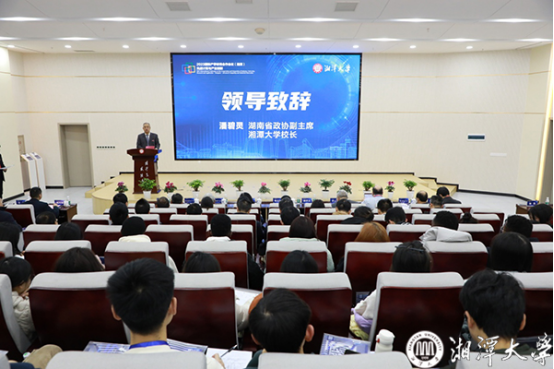
Pan Biling, President of Xiangtan University, Yu Zhisong, Second-level Inspector of the Hunan Provincial Department of Education, Yu Zuguo, Vice President of Xiangtan University, Ge Fei, Vice President of Xiangtan University, along with university experts and industry representatives from China and abroad, attended the event. The opening ceremony was chaired by Vice President Yu Zuguo.
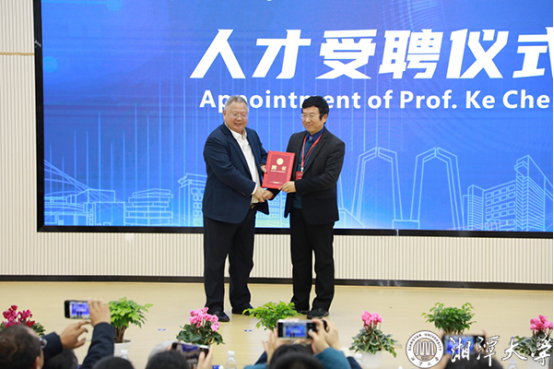
During the conference, Professor Chen Ke, Fellow of the Institute of Mathematics and its Applications (UK) and professor at the University of Strathclyde, UK, was appointed as a Distinguished Professor of the Innovation and Talent Recruitment Base in Mathematics at Xiangtan University. Huang Yunqing, Director of the Hunan National Applied Mathematics Center, presented Professor Chen with the letter of appointment.
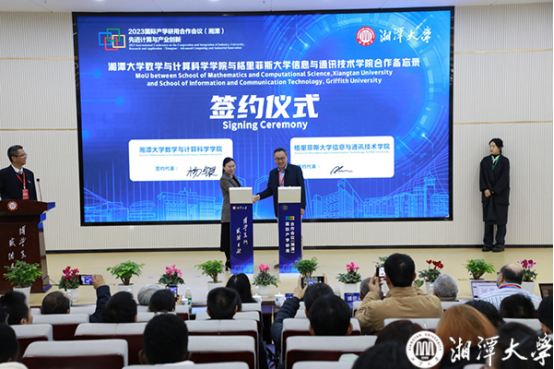
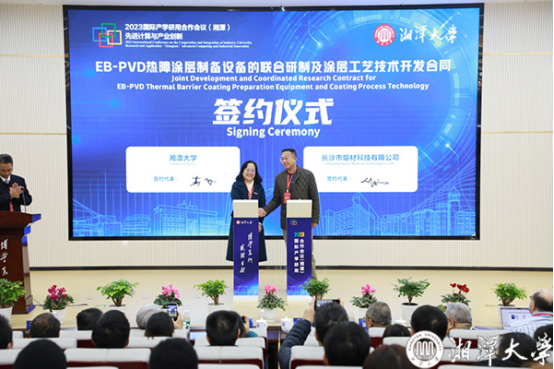
Xiangtan University signed cooperation agreements with Changsha Rongcai Technology Co., Ltd., and with the School of Information and Communication Technology at Griffith University
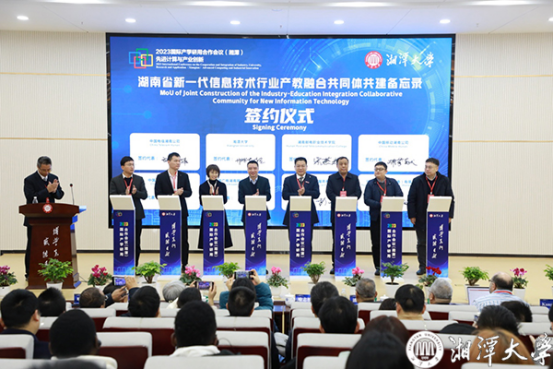
The eight founding members of Hunan Provincial Community for Industry-Education Integration in the New Generation Information Technology Industry signed a memorandum of cooperation and convened the first session of its first board of directors, marking the official establishment of the Community and the beginning of its operational phase.
Hunan Provincial Community for Industry-Education Integration in the New Generation Information Technology was jointly established under the guidance and support of the Hunan Provincial Department of Education and the Hunan Provincial Communications Administration by eight founding members: Hunan Telecom, Hunan Mobile, Hunan Unicom, Hunan Broadcasting System, Hunan TongoFiber, Huawei Technologies Co., Ltd., Xiangtan University, and Hunan Post and Telecommunications College. The Community’s founding membership includes 118 entities, bringing together government departments, industry enterprises, industry organizations, research institutions, and universities. Xiangtan University, Hunan Telecom, and Hunan Post and Telecommunications College serve as rotating chair units.
The Community will establish multiple operational entities based on the resources and needs of its members. It will facilitate deep collaboration between university research units and enterprises, align the chains of education, talent, innovation, and industry, accelerate technological innovation, jointly cultivate talent, expedite the transformation of scientific and technological achievements, and cultivate new drivers of educational openness to support high-quality economic and social development. Specifically, Xiangtan University will collaborate with relevant enterprises and academic institutions to develop a core curriculum for the new generation information technology field, establish technological innovation centers, and facilitate the transformation of scientific and technological achievements.
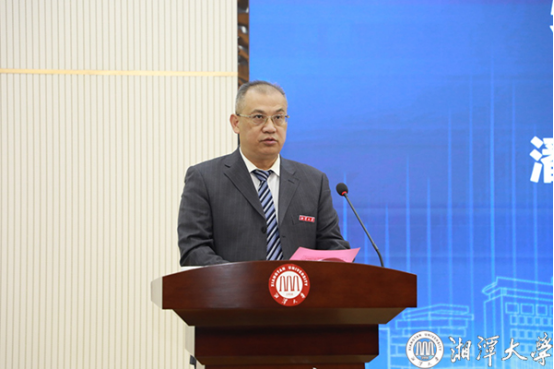
Pan Biling remarked that the world is at a critical juncture of a new wave of technological and industrial transformation. Bringing together scientific questions and contemporary challenges under the theme Advanced Computing and Industrial Innovation,the conference provides an excellent platform for enhancing academic exchanges between Chinese and foreign universities and for deepening industry-university-research collaboration. This platform, he stated, can effectively integrate the chains of education, talent, innovation, and industry, creating an innovation community of scientists, entrepreneurs, investors, and pioneers, and providing robust support for empowering industrial innovation with advanced computing technologies.
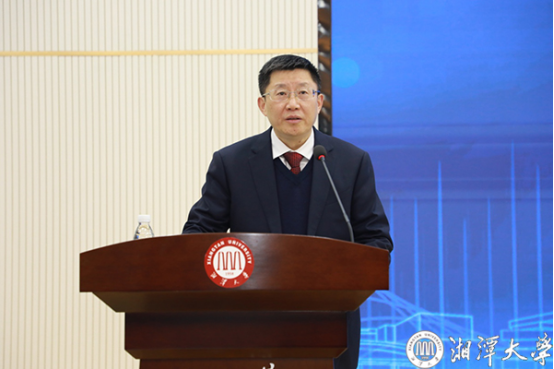
Yu Zhisong stated that international industry-university-research cooperation is a vital driver for building the nation into a global talent and innovation hub, strengthening regional economies, and promoting university development. He expressed hope that universities, research institutes, and enterprises would use the conference as an opportunity to deepen exchanges and collaboration, leveraging Hunan's abundant scientific and educational resources to accelerate technological innovation, contribute to the province’sstrategy of Three Highlands and Four New Missions, and inject new momentum into advancing Hunan as a leading educational province.
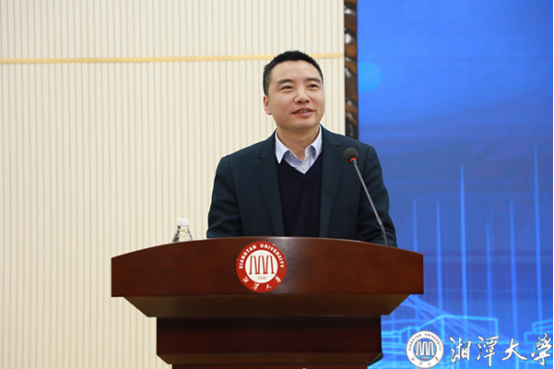
Liu Xinghua, Deputy General Manager of the Government and Enterprise Products Division of China Telecom Hunan Branch, emphasized that the new generation information technology industry urgently needs industry-education integration to enhance talent quality and optimize talent structures. He stated that Hunan Telecom would fully leverage its resources and effectively fulfill the cooperation agreement, working collectively with all parties to deepen and advance international industry-university-research collaboration, drawing on industrial innovation expertise.
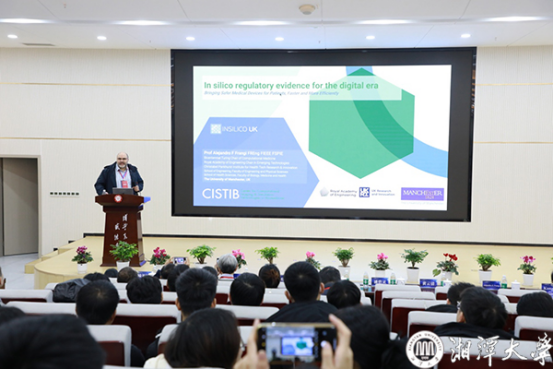
During the plenary session, Professor Alejandro F. Frangi from the University of Manchester, UK, Professor Kang Li from the University of Leeds, UK, and Zhang Li, Senior Director of the Ecosystem Business Development Department at MediaTek Inc., delivered cutting-edge presentations.
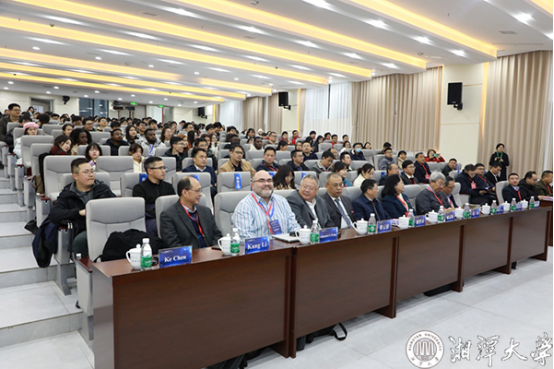
The conference also featured three breakout sessions. Chinese and international experts engaged in discussions on mathematical theories and algorithms in imaging science and AI, computational and applied mathematics, and advances in computational fluid dynamics. Those sessions contributed insights to the goal of achieving higher computational power, greater efficiency, and more diverse application innovations.

 Perspective Students
Current Students
Visitors
Staff
Alumni
Perspective Students
Current Students
Visitors
Staff
Alumni