Video by Duan Shiqing, Yu Wanchu, Wang Nan, Li Caiwei;
Text by Wang Chengqi, Li Wenwen, Xiang Runyuan, Li Caiwei, Wang Kexiang;
Photos by Wang Chengqi, Li Caiwei, Liao Lingxi, Lin Zifan, Wang Xiangyi, Zhang Yuanfu, Chen Li, Zhou Liting
Edited byWang Chengqi
Translated by Li Wenqiang, Huang Can
Source: News Center
On the afternoon of September 10, Xiangtan University held a symposium on the high-quality and distinctive development of higher education in the new era, also serving as a forum for Chinese and international university presidents. Presidents from more than 20 universities at home and abroad gathered to discuss the new missions, challenges, and tasks facing higher education in the new era.Focusing on the high-quality development of higher education, participants shared vivid examples from their own institutions, explored frontier trends in higher education, and exchanged views on the latest thinking regarding discipline development with distinctive characteristics. The forum aimed to broaden perspectives and build consensus for deepening comprehensive reform and accelerating high-quality development in universities. The event was one of the activities marking the 50th anniversary of Xiangtan University’s reopening.
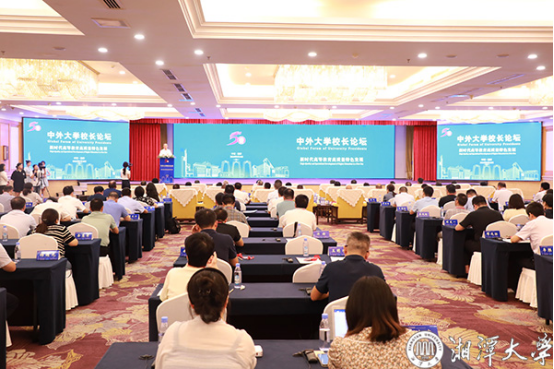
Pan Biling, president of Xiangtan University, and Lan Yong, deputy director-general of the Hunan Provincial Department of Education, delivered remarks. The symposium was chaired by Ge Fei, vice-president of the university.
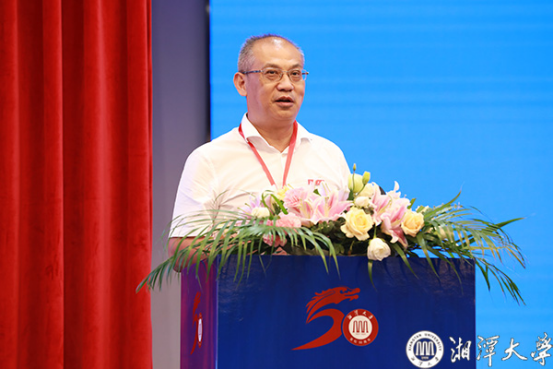
Pan Biling pointed out that holding the Chinese-Foreign University Presidents Forum is an effectivewayto strengthen exchanges and cooperation between universities from various countries and regions. He said the event enhanced understanding, communication, and mutual learning among universities and disciplines with different cultural backgrounds, orientations, and characteristics, and is of great significance for accelerating the high-quality development of higher education, deepening international exchanges and cooperation, and advancing the internationalization of higher education.
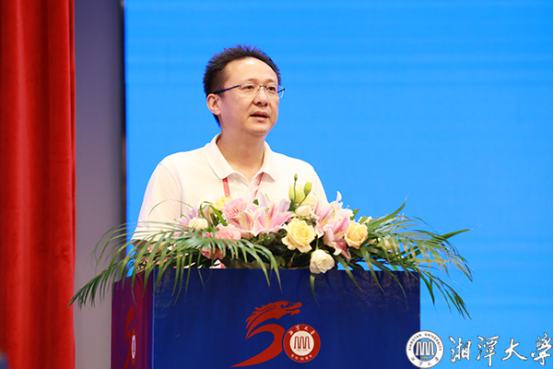
Lan Yong pointed out that inadvancingthe Double First-Class initiative, universities should maintain strategic resolve, fully recognize the long-term, arduous, and complex nature of the task, follow the inherent laws of talent cultivation, discipline development, and scientific innovation, grasp the requirements of high-quality connotative development, focus on priorities and difficult issues, uphold fundamental principles while pursuing innovation, and make sustained efforts over time.
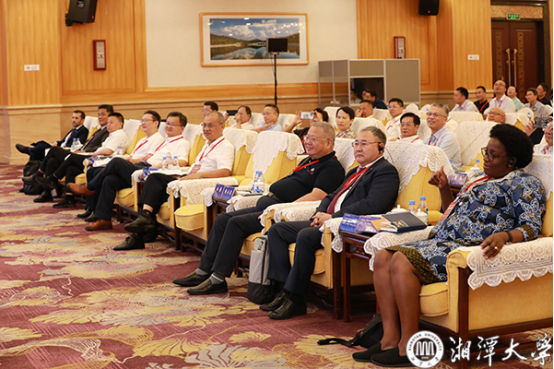
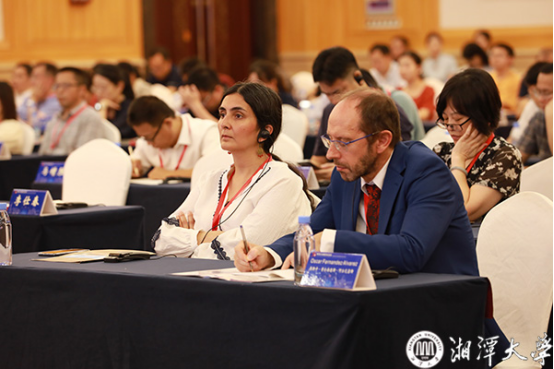
As important intersections of education, science and technology, and talent, universities shoulder major missions and responsibilities in building China into a leading country in education in the new era. The symposium focused on topics such as building a strong education system, developing world-class universities and disciplines, reforming educational systems and mechanisms, and promoting the digitalization, internationalization, and green development of higher education. It provided an academic platform for dialogue among university presidents, enabling participants to learn from peer institutions, complement one another’s strengths, and inspire new ideas.
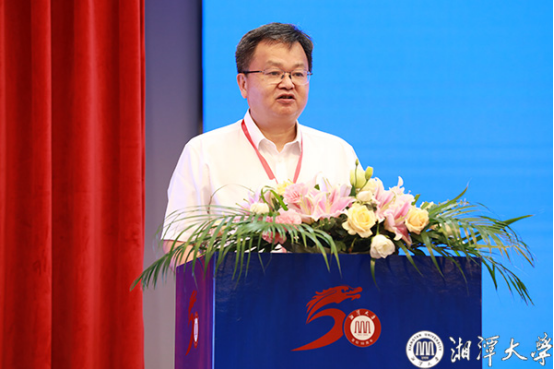
Zhang Pingwen, Member of the Chinese Academy of Sciences and President of Wuhan University, delivered a report titled “Sustaining the High-Quality Development of Double First-Class Universities Through Deepened Reform: Wuhan University’s Practice and Reflections.” He offered an in-depth analysis of development trends in higher education in the new era and, drawing on Wuhan University’s practice, shared experience from three perspectives: raising awareness and fully understanding the significance of deepened reform in Double First-Class development; promoting high-quality development through reform while upholding fundamental principles and encouraging innovation; and focusing on key tasks while advancing Double First-Class development through persistent reform.
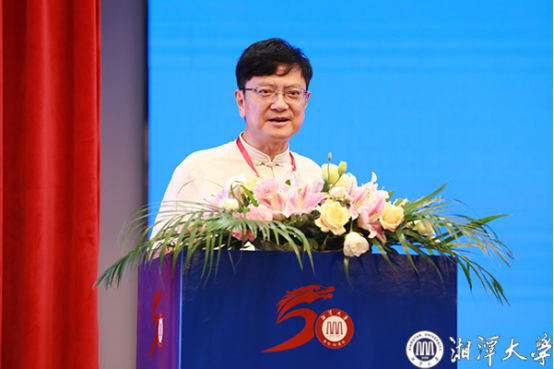
Zheng Qiang, a renowned scholar and Qiushi Distinguished Professor of Zhejiang University, delivered a report titled “Reflections on Educational Development and Industrial Transformation.” From the perspectives of national rise, urban upgrading, and institutional reform, he offered distinctive insights and profound reflections. He argued that universities must be defined with a long-term vision, follow their own developmental logic and requirements, cultivate pillars of the nation, undertake deeper missions, and make university education more soulful.
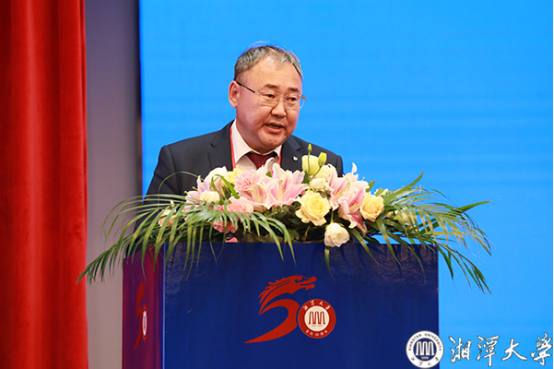
Soloviev Evgeny Eduardovich, Vice President of North-Eastern Federal University in Russia, delivered a report titled “Innovation in the University Academic Environment in the Context of Scientific Development in the Arctic.” He introduced the university’s development in scientific research and innovation across six areas: new materials, energy and logistics, human health, paleoecology, ethnic languages and cultural diversity, and ecoclimatology in the Arctic region.
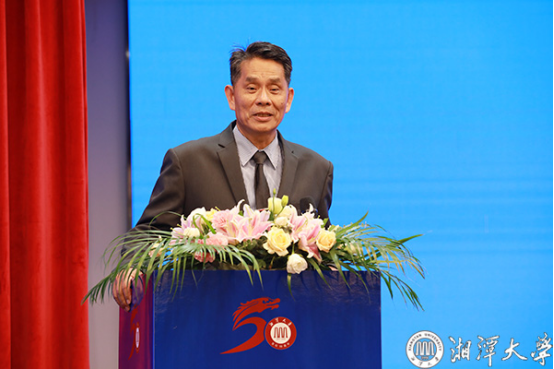
Hsu Huei-Ming, President of National Dong Hwa University in Taiwanprovince, delivered a report “Fostering an Academic Ecosystem in Universities.” He noted that academic research requires sound management systems and support mechanisms, as well as attention to key driving forces. Universities should make full use of funding, policy, and platform support to stimulate research motivation and improve the quality of academic outcomes. At the same time, they should identify their own institutional orientation and values, integrate short-term tasks with medium- and long-term goals, and coordinate and optimize their development layout.
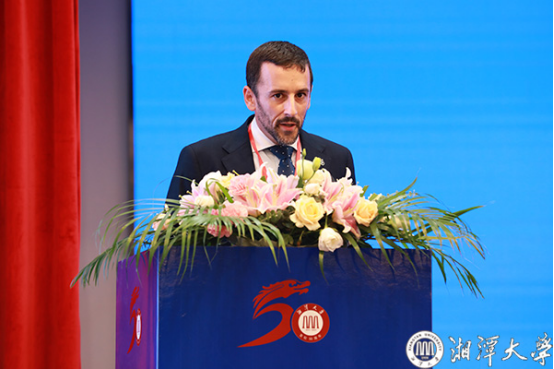
José Alberto Benítez Andrades, Vice President of the University of León in Spain, presented a report titled “Innovating Research Assessment: Best Practices in Europe Today.” Introducing the current European research landscape from the perspectives of ecosystem, major institutions, and international cooperation, he argued that research assessment should adopt broader criteria, emphasize narrative CVs, use responsible metrics, and highlight the positive role of assessment in promoting international collaboration.
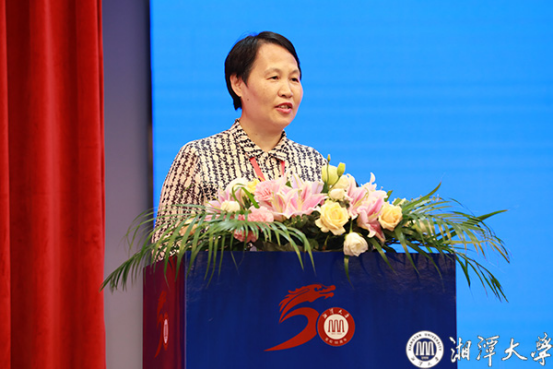
Xie Ziqing, Vice President of Hunan Normal University, delivered a report titled “Exploration and Practice of Top-notch Innovative Talent Training Model in Local Colleges and Universities.”She made an in-depth elaboration from three aspectsincludingimportant national deployment for the training of top-notch innovative talents in the new era,innovative practice of top-notch innovative talents training in Hunan Normal University, andsome thoughts on the training of top-notch innovative talents in local colleges and universities.
Pan Biling delivered a report titled “Making Institutional Characteristics More Distinctive: Reflections on the Discipline Development of High-Level Local Universities.”. He held that highlighting the characteristics of universities and integrating into the overall strategic developmentis an inherent requirement of the national Double First-Class initiative, an inevitable path for the school-running of local high-level universities, and a realistic need for the construction. Xiangtan University will further optimize the discipline layout, strengthen the construction of basic disciplines, improve humanities disciplines, consolidate science disciplines, strengthen engineering disciplines, and supplement medical disciplines, to achieve high-quality development.

 Perspective Students
Current Students
Visitors
Staff
Alumni
Perspective Students
Current Students
Visitors
Staff
Alumni